
Loading...
Relapse Doesn't Happen Overnight
It starts with a mood swing. Then dishonesty. Then isolation. Then "just once won't hurt." You're not watching for the slip—you're watching for the warning signs that come weeks before. Spot them early. Use your tools. Stay locked in.

Warning Signs
Relapse starts long before the slip. These are the red flags — learn to spot them in yourself before they escalate.
Emotional
- • Mood swings
- • Irritability
- • Anxiety
- • Feeling overwhelmed
- • Isolation
Mental
- • Romanticizing past use
- • Thinking "just once won't hurt"
- • Dishonesty
- • Impatience
- • Defensiveness
Physical
- • Changes in sleep
- • Changes in appetite
- • Restlessness
- • Fatigue
- • Physical tension
Behavioral
- • Skipping meetings
- • Avoiding support people
- • Secretive behavior
- • Poor self-care
- • Reckless actions
Your Relapse Prevention Toolkit
Interactive tools to build your personalized safety plan and map your triggers.
Warning Signs
What tells you a crisis is developing?
Coping Strategies
What can you do on your own to stay safe?
People Who Can Help
Who can you reach out to?
Professionals & Crisis Lines
Who can provide professional help?
Reasons to Live
What keeps you going?
What steps can you take to make your surroundings safer?
Coping Cards
When the urge hits, your brain goes offline. These are your lifelines — read them when you need them most.
I am not my worst moments. I am the one who keeps getting back up.
This feeling is temporary. I have survived 100% of my bad days so far.
I don't have to figure it all out today. Just the next right thing.
My recovery is worth more than any momentary relief.
I am building a life I don't need to escape from.
Asking for help is strength, not weakness.
One day at a time. One hour at a time. One breath at a time.
I deserve the life I'm working for.
Stress: Your #1 Relapse Trigger
Stress doesn't cause relapse directly — but unmanaged stress is the gateway. Here's why.

The Stress-Relapse Cycle
Stress activates your amygdala — the part of your brain that screams "danger!" When you're stressed, your prefrontal cortex (your thinking brain) goes quiet.
Your body craves relief. After months or years of using your substance to numb stress, your nervous system still reaches for that familiar pattern. It's not a character flaw — it's a wired pathway.
Without alternatives, you're vulnerable. When you don't have healthy coping tools practiced and ready, stress will push you toward old habits. This is why relapse prevention is really about stress mastery.
Stress Levels in Hospitality Work
You work in one of the highest-stress industries. Friday night service, angry guests, kitchen heat, understaffing, 12-hour shifts — your stress load is real and constant. This means your relapse prevention plan needs to be equally robust.
- • Shift-based stress: Unpredictable schedules, late nights, physical exhaustion
- • Interpersonal stress: Difficult guests, tense kitchen dynamics, leadership pressure
- • Environmental stress: Heat, noise, fast pace, high stakes
- • Financial stress: Inconsistent income, tips-based pay, financial instability
The Stress-Relapse Window
Hours 0-2: Acute Stress
Peak vulnerability. Your nervous system is flooded. This is when coping tools matter most.
Hours 2-6: Processing Phase
The urge may intensify as your body seeks relief. This is where your toolkit prevents the slip.
Hours 6+: Integration
If you've managed stress through this window with healthy tools, the risk drops significantly.
Your Stress Mastery Advantage
The good news: You can rewire this. Every time you navigate stress without using, you're building new neural pathways. Your brain learns: "I can survive this feeling. I have options."
Relapse prevention + stress management = The foundation of your recovery.
Sustainable Coping Strategies
The best coping strategy is one you actually use. These are battle-tested tools for hospitality workers.
In-the-Moment Tools (0-30 minutes)
Box Breathing + Cold Water
When stress hits during your shift: Find a quiet spot (walk-in cooler counts). Box breathe (4-4-4-4). Splash cold water on your face. Reset in 3 minutes.
Movement Interruption
Step outside. 30 seconds of intense movement: jumping jacks, push-ups, walking fast. Shake out the stress literally.
Sensory Grounding (5-4-3-2-1)
Name 5 things you see, 4 you feel, 3 you hear, 2 you smell, 1 you taste. Anchors you in the present moment.
Daily Prevention Practices (15-60 minutes)
Morning Nervous System Reset
10-minute breathing practice + 5-minute journaling. Sets your nervous system's baseline before the day's stress hits.
Post-Shift Decompression (20-30 minutes)
Don't go home and dive into substances. Instead: stretching, journaling, a shower, or a walk. Process the shift's stress before it festers.
Weekly Stress Audit
30 minutes on a quiet day: review your week's stressors, coping wins, and vulnerability points. Adjust your plan for next week.
The Golden Rule: Preparation Over Willpower
You cannot rely on willpower when stressed. Willpower is a muscle that exhausts under stress. Instead, practice your coping tools when calm. Then when stress hits, your nervous system knows what to do automatically. This is mise en place for your mind.
Your Daily Relapse Prevention Checklist
Relapse prevention isn't something you do once. It's a daily practice. These are non-negotiables.
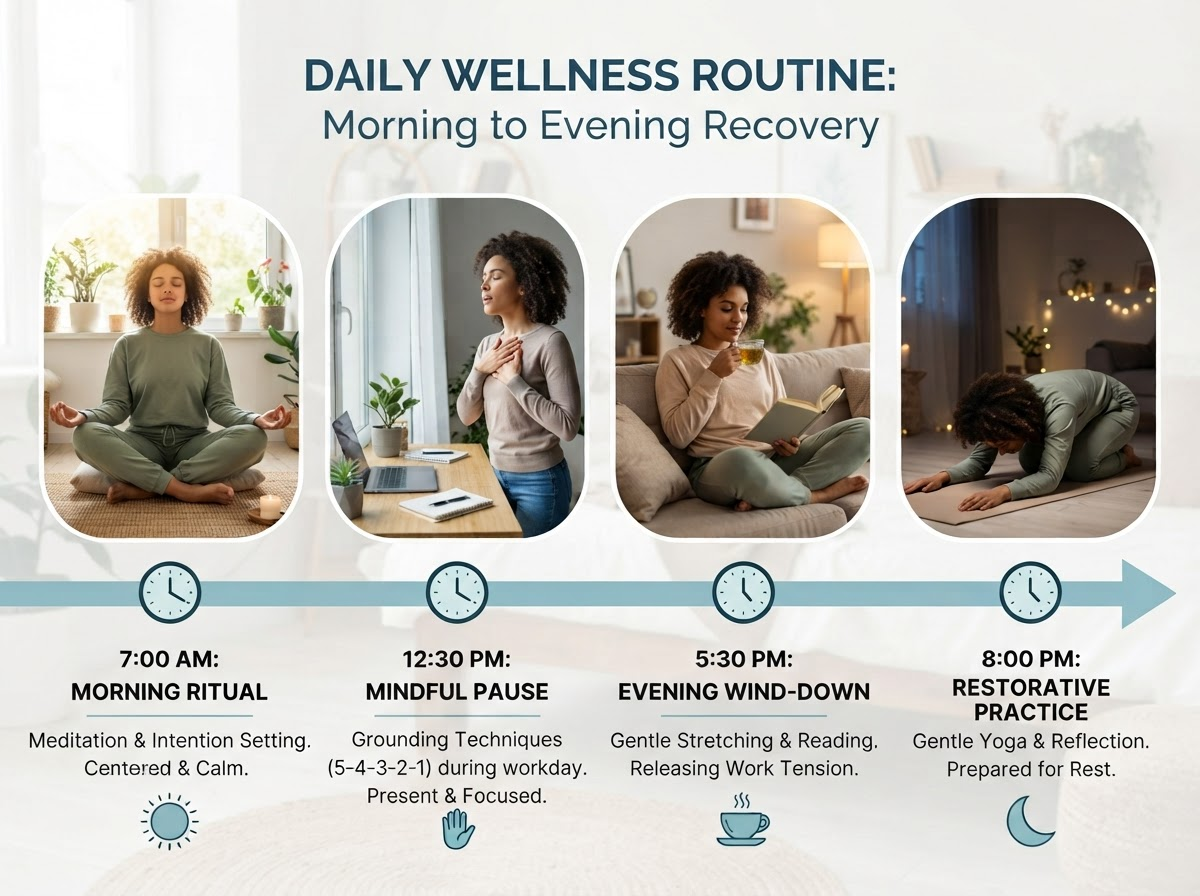
Morning (10 minutes)
- ✓ Breathing practice or meditation
- ✓ Check your relapse warning signs (am I trending emotional, mental, physical, or behavioral?)
- ✓ Journal your intentions for the day
- ✓ Reach out to one support person or think of one win from yesterday
Throughout the Day
- ✓ Notice stress building (is my jaw tight? am I withdrawing?)
- ✓ Use a grounding technique before stress escalates
- ✓ Take a 3-minute break every 2 hours (walk, breathe, hydrate)
- ✓ Reach out if urges arise (text, call, or see a support person)
Post-Shift (20-30 minutes)
- ✓ Physical decompression: shower, stretch, or walk
- ✓ Journal about what stressed you and what helped
- ✓ Reconnect with your "why" (why is recovery worth it?)
- ✓ Plan one nourishing activity before bed
Evening (5-10 minutes)
- ✓ Reflect on the day: three wins, one challenge, one lesson
- ✓ Rate your relapse risk today (1-10)
- ✓ If risk was above 5, identify what needs to change tomorrow
- ✓ Sleep prep: no screens 30 minutes before bed
Emergency Resources
If you're in crisis right now, reach out immediately.
Remember: Reaching out for help is not a sign of weakness. It's a sign of strength. You don't have to do this alone.